
Free Forex Trading Options in South Africa
Explore free forex trading opportunities in South Africa 🌍 including demo accounts, learning tools, and tips to trade without upfront investment safely and smartly.
Edited By
Edward Mason
Forex trading, also known as foreign exchange trading or FX trading, involves buying and selling currencies to profit from changes in exchange rates. Unlike the Johannesburg Stock Exchange (JSE) where shares are traded, forex operates as a global, decentralised market with daily volumes exceeding $6 trillion. This makes it the largest and most liquid financial market worldwide.
The forex market runs 24 hours a day during weekdays, reflecting global time zones, so traders in South Africa can participate across different sessions, including London and New York. Currency pairs, such as USD/ZAR or EUR/USD, lie at the heart of this market. Each pair represents the relative value of one currency against another, and the goal is to buy low and sell high—or vice versa, depending on the trader's strategy.
Understanding key forex terms is essential: the 'base currency' is the first currency in a pair, while the 'quote currency' is the second. A 'pip' measures the smallest price move. For example, if USD/ZAR moves from 15.00 to 15.01, that’s a one-pip move.
Several factors influence forex prices, including interest rates, political events, economic data, and market sentiment. South Africa’s rand (ZAR) often reacts sharply to domestic issues like changes in SARB’s repo rate, Eskom’s loadshedding schedules, and commodity prices, especially gold and platinum, given their export importance.
Successful forex trading combines analysis and practical awareness. Traders use technical analysis tools like moving averages or RSI alongside fundamental data. Meanwhile, risk management—using stop-loss orders and cautious position sizing—helps protect capital from the highly volatile market moves.
For South African traders, access to forex trading often comes via brokers regulated by the Financial Sector Conduct Authority (FSCA). Local considerations include understanding account types (such as full margin trading accounts or Islamic forex accounts) and being wary of scams promising guaranteed profits.
In short, forex trading offers opportunities but demands knowledge, discipline, and awareness of both global and local market drivers. The following sections will unpack these concepts with precision and use cases applicable to traders in Mzansi and beyond.
Forex trading involves exchanging one currency for another to profit from changes in exchange rates. At its core, it's about buying a currency expecting it to gain value against another. For instance, if you believe the South African rand (ZAR) will weaken against the US dollar (USD), you might buy USD/ZAR currency pair to sell it later at a better rate.
Currency exchange is simply the conversion of one country's money into another’s. This happens because global trade and travel require payments in different currencies. Take a tourist from Durban visiting London — they’ll need British pounds (GBP) instead of rand to make purchases. Forex trading scales this up to billions of rands transacted daily, where participants speculate or hedge against currency movements. Unlike changing cash at a local bureau de change, forex trading uses electronic platforms for instant, worldwide currency transactions.
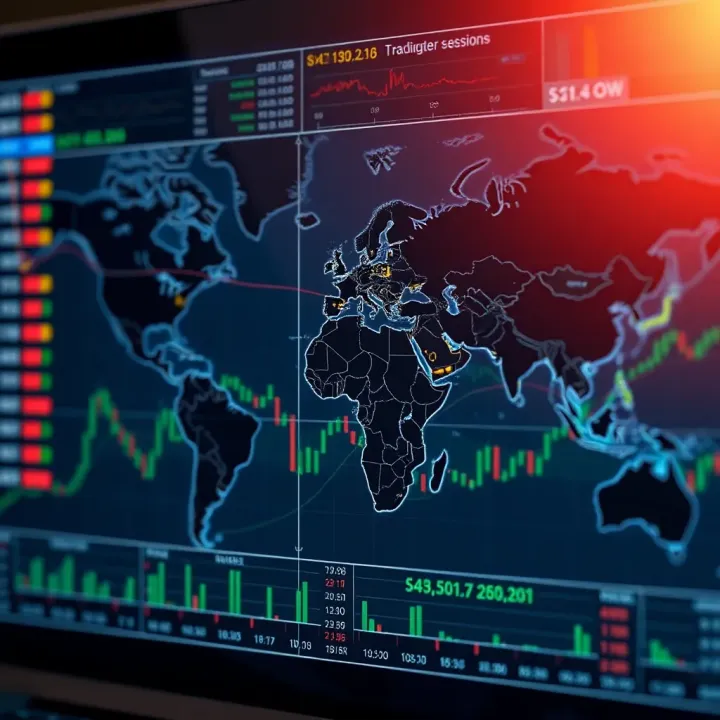
Forex markets are decentralized, meaning no single exchange or location controls them. Instead, banks, financial institutions, brokers, corporations, and retail traders trade in a global network around the clock, except weekends. Trading moves continuously across Sydney, Tokyo, London, and New York sessions, reflecting different time zones. Liquidity—how easily currencies can be bought or sold—peaks when sessions overlap. For example, the London-New York overlap is often the busiest, offering the best trading opportunities for rand versus hard currencies.
Forex stands apart from stock or bond markets due to its size, accessibility, and operating hours. The daily forex turnover exceeds $6 trillion, dwarfing the global equity markets. You typically trade currency pairs rather than single securities. Plus, forex markets run 24 hours during weekdays, not limited by a physical exchange's opening hours. Also, leverage in forex is often higher, meaning traders can control larger positions with smaller capital, but with greater risk of losses. Unlike stocks, forex isn’t tied to company performance; instead, it’s affected by economic data, geopolitics, and central bank policies.
Forex trading offers flexibility and liquidity unmatched by other markets, making it attractive but demanding deep understanding and disciplined risk management.
Understanding these fundamentals sets the stage for exploring strategies and risks involved in forex trading, especially within the South African context.
Forex trading comes with a few defining features that shape how traders approach the market. Understanding these features not only helps decode the technical jargon but also sets you up for practical success. Currency pairs, leverage, and market hours, for example, determine the opportunities and risks you encounter every day.
Major pairs are the backbone of forex trading. These pairs always include the US dollar (USD) combined with another leading currency like the euro (EUR), British pound (GBP), or Japanese yen (JPY). For instance, EUR/USD is the most traded pair worldwide. Majors tend to be highly liquid which means they're easier to buy and sell quickly without big price swings. This liquidity often translates to tighter spreads, saving traders money on transaction costs.
On the other hand, minor pairs consist of two major currencies, but don’t include the US dollar. Examples include EUR/GBP or AUD/NZD. These pairs aren't quite as liquid as majors, so spreads tend to be wider. However, they offer traders opportunities to capitalise on movements between regional economies, such as the economic ties between Australia and New Zealand or the UK and Europe. Minors see less volatility compared to more exotic pairs, making them a middle ground option for traders seeking variety without wild price swings.
Exotic pairs mix a major currency with that of a smaller or emerging market, like USD/ZAR (US dollar/South African rand) or EUR/TRY (euro/Turkish lira). These pairs are attractive because they offer potentially larger price moves thanks to lower liquidity and more economic uncertainty. That said, trading exotic pairs comes with wider spreads and higher risk, which means costs can quickly add up if the market moves against you. South African traders often keep an eye on USD/ZAR specially because it reflects rand volatility directly tied to local economic events.
Leverage in forex allows you to control a larger position than your initial capital would normally allow — think of it as a loan from the broker to increase your buying power. For example, with 1:100 leverage, you can open a R10,000 position with just R100 of your own money. While this can boost profits, it also magnifies losses. Margin is the amount of your own money you need to put up to keep these trades active. It’s essential to manage leverage responsibly because overexposing your account can wipe you out quickly.
The forex market runs 24 hours a day during weekdays, thanks to global financial centres operating in different time zones. Major sessions include London, New York, Tokyo, and Sydney. London overlaps with New York in the afternoon, creating the most liquid and volatile period of the day. Liquidity tends to drop outside these hours, leading to wider spreads and less predictable price movement. Being aware of these market hours helps you plan your trades, especially if you're targeting specific currency pairs active in particular regions.
Remember, knowing market features is not just academic. It shapes your approach and helps avoid costly mistakes, especially when trading with leverage or less liquid pairs.
In sum, understanding currency pairs, how leverage works, and when the market is most active arms you to trade smarter. The risks are real, but so are the opportunities if you know what to watch for.
Different trading methods suit different traders depending on their goals, time availability, and risk appetite. Understanding popular forex trading methods helps you pick a style that fits your personality and trading plan. Here, we look at some common approaches and their practical pros and cons.
Day trading involves opening and closing positions within the same trading day, avoiding overnight exposure to market moves. Scalping is an even faster variant, targeting small profits from quick entry and exit, sometimes within minutes or seconds. Both methods require close market attention, fast decision-making, and a good trading platform.
For example, a day trader might buy the EUR/USD pair in the morning expecting a short-term rise, then sell well before the South African market closes to avoid risks overnight. Scalpers, meanwhile, might place dozens of tiny trades on the USD/ZAR pair during hours of high liquidity to rake in cumulative gains. These methods suit traders comfortable with rapid action and capable of handling the stress of continuous market monitoring.
Swing trading spans a few days to several weeks, aiming to capture larger price shifts than intraday traders. Position trading goes even longer, holding trades for months based on fundamental trends or economic outlooks. Both focus less on daily noise and more on spotting longer-term shifts.
A swing trader in SA might spot weakening fundamentals in the rand due to domestic issues, thus selling USD/ZAR to profit from expected rand depreciation over weeks. A position trader, however, could bet on sustained dollar strength versus emerging market currencies by holding for months based on global monetary policies. These methods require patience and the ability to resist reacting to minor market fluctuations.
Common technical indicators help traders identify trends, support and resistance levels, and potential entry or exit points. Popular tools include moving averages, Relative Strength Index (RSI), and Bollinger Bands. For instance, a trader may use a 50-day moving average to confirm upward momentum in GBP/USD before entering a buy position. Technical analysis suits those who prefer data-driven decisions based on price patterns.
Impact of economic news plays a significant role in forex trading. Economic releases like South Africa’s GDP data, interest rate announcements by the South African Reserve Bank, or US employment figures affect currency values sharply. Traders who follow fundamental analysis often prepare for such events by adjusting positions or setting stop-loss orders to protect against sudden moves. This approach benefits traders who consider macroeconomic developments critical in shaping long-term currency trends.
Practical trading success usually comes from combining methods—using technical indicators for timing while keeping an eye on economic news to understand market context. Understanding each of these methods gives traders tools to adapt to various market conditions and trade smarter, not just harder.
Understanding the risks and considerations in forex trading is essential for anyone serious about entering the market. Forex markets are notoriously volatile, and this volatility can lead to rapid profits but also significant losses. Grasping these risks helps traders manage their capital wisely and avoid costly mistakes.
Forex markets constantly shift due to economic data releases, geopolitical events, and central bank decisions. For example, the South African rand can swing sharply after SARB (South African Reserve Bank) interest rate announcements or changes in commodity prices like gold and platinum. Such swings create opportunities but also expose traders to unpredictable price moves.
This volatility means that even well-researched trades can suddenly reverse course. A trader who goes long on USD/ZAR expecting rand weakness might get hit hard if unexpected positive local economic data strengthens the rand instead. So, recognising the impact of market fluctuations and staying alert to breaking news is crucial.
Leverage allows traders to control large forex positions with relatively small capital. While this can magnify gains, it also multiplies losses. For instance, trading with 100:1 leverage means a 1% adverse price move wipes out your entire invested margin.
Many inexperienced South African traders overuse leverage, often lured by brokers advertising high ratios. Without cautious risk controls, this approach can lead to rapid capital erosion. It is important to understand that leverage isn't a free lunch but a double-edged sword demanding respect and discipline.
Effective risk management separates successful forex traders from those who consistently lose money. Two key tools every trader should master are stop-loss orders and position sizing.
A stop-loss order automatically closes a position at a predetermined price to limit losses. For example, say you buy EUR/USD at 1.2000 expecting it to rise, but you set a stop-loss at 1.1950. If the price falls, your trade exits at 1.1950, capping your loss to 50 pips. This prevents emotions from delaying exit decisions and protects your portfolio from deep losses.
In volatile forex markets, daily price moves can be sharp, so placing your stop-loss too tight might trigger premature exits. Conversely, setting it too wide exposes you to bigger losses. Finding the right balance depends on your trading strategy and risk tolerance.
Position sizing refers to adjusting the trade size based on your risk appetite and account balance. For example, if you decide to risk only 1% of your R10,000 trading account per trade, you’d allocate R100 to potential losses. If your stop-loss is 50 pips away, you calculate the size of your position so that a 50-pip loss equals R100.
This disciplined approach ensures you don't overexpose your account on any single trade and can survive losing streaks without wiping out your capital. Without controlling position sizes, even a few bad trades can drain funds quickly.
Remember, managing risk is not about avoiding losses entirely but about controlling them so you can trade another day. Proper risk management tools help you stay in the game longer and increase your chances of success.
By keeping volatility and leverage risks in check and applying solid risk management techniques like stop-loss orders and position sizing, traders can better protect their capital while navigating the unpredictable forex markets.
Forex trading holds particular significance in South Africa given the country’s unique economic conditions and regulatory framework. For many local traders and investors, the forex market offers a way to diversify their portfolios beyond traditional equities and bonds. Moreover, with the rand’s well-known volatility, forex trading presents opportunities to profit from currency fluctuations, albeit with inherent risks. Understanding local dynamics, including regulatory and exchange control rules, is vital for anyone serious about trading forex in South Africa.
The Financial Sector Conduct Authority (FSCA) plays a central role in overseeing forex tradingwithin South Africa. It is responsible for ensuring brokers and financial service providers operate fairly and transparently, protecting traders against fraud and malpractice. For example, the FSCA sets out standards for ethical behaviour, licensing requirements, and client fund protection. This oversight helps to build confidence among local traders considering forex as an investment avenue.
Compliance requirements guided by the FSCA mean that brokers must run transparent operations and meet capital adequacy standards to safeguard clients. South African traders should check that their broker is FSCA-licensed before depositing money. Failure to comply with these regulations can lead to penalties or broker shutdowns. Practically, this means you are less likely to encounter shady or unregulated platforms when trading through authorised brokers.
South African brokers like IG South Africa, CM Trading, and RMB Forex cater specifically to local traders by offering educational resources tailored to the South African market and allowing deposits in rand. These brokers tend to comply with FSCA requirements and provide direct support channels suited to South African clients. Using a local broker may also simplify tax reporting and fund withdrawals as transactions remain within South African banking systems.
Several international brokers are accessible from South Africa, such as Plus500, AvaTrade, and XM. These firms often bring wider product offerings and advanced trading platforms but may operate under regulations from other jurisdictions. While some South African traders prefer international brokers for greater instrument diversity, it remains essential to verify the broker’s global reputation and whether they offer adequate customer support in South Africa.
Exchange control rules imposed by the South African Reserve Bank restrict the flow of currency out of the country. This limits how much rand individuals can convert into foreign currency annually — currently capped at R1 million per calendar year for individuals. These controls can affect forex traders’ flexibility, especially when withdrawing profits or transferring funds offshore. Traders must plan carefully to stay within these allowances and avoid regulatory complications.
The rand’s volatility also imposes challenges and opportunities. Sharp swings against major currencies like the US dollar or euro can create profitable short-term trades but add an extra layer of risk due to unpredictable market movements. For example, political developments or global commodity price changes often cause sudden rand fluctuations. Such volatility requires a disciplined approach and robust risk management from South African forex traders.
Trading forex in South Africa demands not only an understanding of global currency movements but also awareness of local regulations and economic factors that influence the rand’s behaviour. Staying informed and working with regulated brokers can make a significant difference in your trading experience.
Getting started with forex trading without a proper plan or understanding can quickly lead to losses and frustration. This section focuses on practical advice to help new traders navigate the market with a clearer head and better preparedness. From crafting a trading plan to practising in a risk-free environment and setting achievable goals, these steps build solid foundations that matter in real trading scenarios.
A trading plan is your roadmap in the forex market. It outlines your trading goals, risk tolerance, time commitment, and methods for entering and exiting trades. Without this plan, you risk making impulsive decisions based on emotions rather than strategy. For example, a trader could decide upfront to never risk more than 1% of their capital on a single trade; this helps avoid devastating losses during volatile periods.
Your plan should also cover how you analyse the market—whether you prefer technical indicators or fundamental news—and specify your preferred currency pairs. Having clear criteria for trade setups can reduce guesswork and improve consistency. Think of it like having a braai recipe: when you know the ingredients and steps, the outcome is more predictable.
Most reputable brokers offer demo accounts where you can trade with virtual money in real market conditions. This tool is invaluable as it lets you practice strategies and navigate trading platforms without risking your hard-earned Rands. For instance, testing a plan under different market scenarios—like during rand volatility or economic announcements—helps build confidence before going live.
The demo environment also familiarises you with order types, charting tools, and risk management features. It’s worth spending weeks or even months practising, as many traders jump into live markets too soon and burn capital that could have been preserved with proper preparation.
While there’s plenty of online content about forex, not all sources are trustworthy. Look for well-regulated brokers' educational materials, books by experienced traders, or online courses offered by recognised financial institutions. In South Africa, forums and webinars hosted by the FSCA or reputable trading academies can be excellent starting points.
Skill-building should include both technical analysis—understanding charts and indicators—and macroeconomic fundamentals that influence currency movements. This combined knowledge sharpens your ability to make informed decisions rather than relying on tips or hearsay.
Forex trading isn’t a get-rich-quick scheme. Many new traders expect instant success, but the reality is different. Profits come over time through discipline, practice, and continuous learning. Setting achievable goals, like modest weekly returns and limiting losses, can keep motivation steady.
Realistic expectations also mean accepting some losses as part of the process. Even the most experienced traders hit losing streaks. The key is managing those losses with strategies like stop-loss orders and keeping position sizes small relative to your overall capital.
Remember: Successful forex trading depends just as much on mindset and preparation as on market knowledge. Being practical and patient pays off in the long run.
In summary, building a thoughtful trading plan, practising on demo accounts, educating yourself from reliable sources, and setting practical goals are steps that help aspiring traders avoid common pitfalls. These foundations prepare you better for the ups and downs of forex markets, making your trading journey more manageable and hopefully more rewarding.
Explore free forex trading opportunities in South Africa 🌍 including demo accounts, learning tools, and tips to trade without upfront investment safely and smartly.
Discover tailored forex trading strategies for South African traders 🇿🇦. Learn foundational tactics, advanced methods, and smart risk management to boost your trading game. 💹💡
📊 Learn how global forex trading sessions align with South African time, plus get tips and downloadable PDF schedules for smarter trading decisions.

📈 Explore top forex trading seminars in South Africa! Learn benefits, key details, and legal tips to choose the best live forex events near you.
Based on 10 reviews