

Practical Tips for Forex Trading Success in South Africa
Master forex trading in South Africa 🇿🇦 with tips on market mechanics, risk control, emotional discipline & technical analysis 📈 for steady success.
Edited By
Isabella Walker
Forex trading is like navigating a busy Johannesburg taxi rank: fast-paced, sometimes chaotic, but full of opportunity if you know where to look. South African traders face unique challenges, such as the rand’s volatility against currencies like the US dollar or euro, and local economic events that ripple quickly through the forex market.
To give you a leg up, this article breaks down practical examples of forex trades tailored to South African realities. Instead of abstract jargon, you’ll get clear, hands-on scenarios showing how actual trades work, how to manage risks, and which currency pairs to watch closely.

Forex trading is not about guessing; it’s about managing risk and recognising patterns that give you an edge.
We'll cover:
The basics of common currency pairs involving the rand (ZAR)
Examples of long (buy) and short (sell) trades in real market conditions
How to use stop-loss orders to protect your capital
The impact of local news — like SARB interest rate announcements or loadshedding schedules — on trading decisions
Whether you’re stepping into forex for the first time or sharpening your approach, these examples will ground your understanding in everyday practice rather than theory alone. Let’s get you trading smarter, not just harder.
Grasping the basics of forex trading is vital for anyone looking to step into the foreign exchange market. For South African traders, this understanding helps to make sense of how different currencies relate and interact, especially when dealing with the rand (ZAR) against other currencies.
A forex trade always involves a currency pair—two currencies quoted against each other, like USD/ZAR or EUR/USD. The first currency is the base, while the second is the quote currency. For instance, in the USD/ZAR pair, the price shows how many rand are needed to buy one US dollar. Knowing this helps you decide whether you want to buy or sell based on the relative strength or weakness of these currencies.
When you buy a currency pair, you're purchasing the base currency and selling the quote currency. Conversely, if you sell the pair, you’re selling the base currency and buying the quote. For example, if you expect the rand to weaken against the dollar, you'd buy USD/ZAR. If the rand actually drops from R15.50 to R16.00, you've made a profit buying the pair. Understanding this dynamic is key to anticipating which way the trade should go.
Movement in forex prices is measured in pips, usually the fourth decimal place (0.0001), and lots represent the size of your trade. One standard lot is 100,000 units of the base currency. For South African traders, even small price changes (pips) can significantly impact profits or losses due to leverage. For example, a 50-pip move on a standard lot of USD/ZAR could mean a R5,000 difference, so recognising these terms helps you manage your risks properly.
Major pairs include currencies like USD, EUR, GBP, and JPY, paired mostly against each other, and tend to have high liquidity and lower spreads. Minor pairs involve less commonly traded currencies, while exotic pairs often pit a major currency against a smaller or emerging-market currency—like USD/ZAR. Exotic pairs usually exhibit more volatility and larger spreads, which can offer opportunities but also higher risk.
USD/ZAR and EUR/ZAR are the most traded pairs by South African traders because the rand is the base of day-to-day economic activity. USD/ZAR reflects global economic influence, while EUR/ZAR often reacts to movements in the European economy and trade relations. Knowing these two pairs and how they behave helps traders stay ahead in the market.
South African economic indicators like SARB’s interest rate decisions, mining output data, or political events can cause sudden swings in rand pairs. For instance, an unexpected SARB interest rate hike might strengthen the rand against the dollar, causing USD/ZAR to drop. Traders who keep an eye on these local factors can time their trades more effectively, reducing surprise losses.
Having a solid grasp on how forex trades work and which currency pairs are relevant locally sets a strong foundation for more advanced trading decisions.
Understanding different forex trading strategies is essential for South African traders aiming to navigate the market effectively. Each strategy suits different trading styles, timeframes, and risk appetites. Discussing practical examples helps clarify when and how to apply these techniques, especially given local factors like rand volatility.
Spot trading involves buying or selling a currency pair for immediate settlement, often within two business days. For South Africans, the USD/ZAR pair is particularly popular due to its liquidity and sensitivity to local economic conditions. Traders focusing on short-term gains might buy USD/ZAR expecting the rand to weaken, perhaps before an anticipated SARB interest rate change, profiting when the pair moves in their favour.
Knowing when to enter and exit spot trades demands close attention to market signals. For instance, a trader might enter a USD/ZAR position just before a scheduled economic report like GDP growth figures, aiming to exit swiftly once the market digests the news and the price moves favourably. Tools like technical indicators, such as moving averages or support and resistance levels, assist in timing these decisions precisely.
Swing trading aims to capture price movements over several days to weeks, identifying medium-term trends rather than rapid fluctuations. Traders watch for patterns that signal a probable uptrend or downtrend, positioning themselves accordingly. This style suits those who cannot monitor the market constantly but still want to benefit from predictable shifts.
Consider the GBP/USD pair as a basic example. Suppose a trader notices the pound gaining strength due to upcoming political stability in the UK, combined with technical signals like a breakout above a key resistance level. The trader might hold a long position for days, booking profits as the trend progresses. Swing trading requires patience and confidence in the analysis but often faces less stress than rapid trading styles.
Scalping focuses on making many small trades to capture tiny price moves, often within seconds to minutes. It's intense and demands quick decisions and execution. The idea is to accumulate small profits that add up over time, rather than seeking large single gains.
For scalping, traders usually stick to highly liquid pairs like EUR/USD or USD/ZAR to ensure tight spreads and faster order fills. Low liquidity pairs can have wider spreads, making scalping less viable. Scalping is better suited for traders with fast internet connectivity and access to responsive trading platforms, which South African traders should keep in mind when choosing brokers.
Spot trading, swing trading, and scalping each offer unique approaches suited to different needs. Picking the right strategy depends on your trading goals, time availability, and how you handle risk.
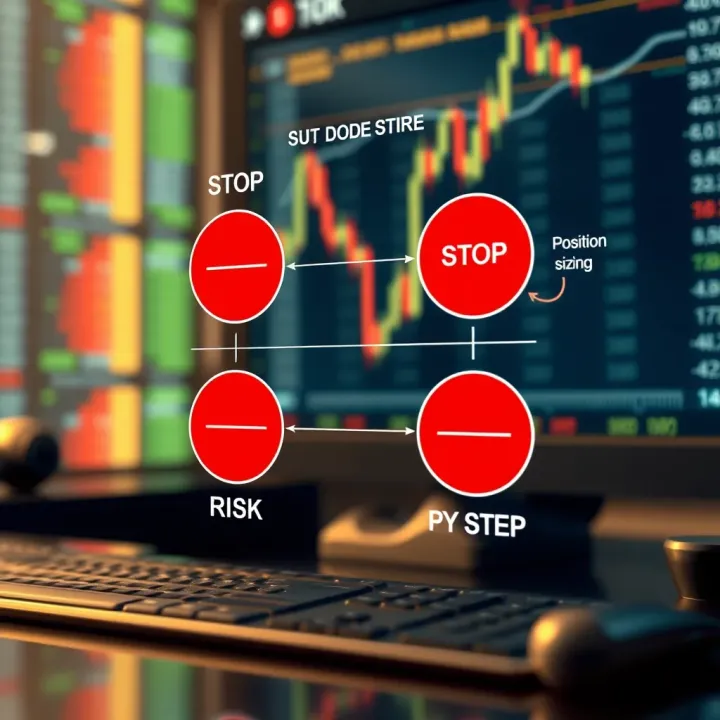
Managing risk is a fundamental part of successful forex trading, especially for South African traders who face additional market uncertainties like rand volatility and economic shifts. Using practical examples helps demystify risk controls, showing traders how to protect their capital rather than just chasing profits. This section focuses on key techniques such as stop-loss orders, position sizing, and the careful use of leverage, demonstrating how these tools work in real-life trades.
A stop-loss order automatically closes a trade at a predetermined price to prevent further losses. Take the EUR/ZAR pair, for instance: if you buy EUR/ZAR at 19.50, you might set a stop-loss at 19.20 to limit your downside risk. If the rand strengthens unexpectedly due to local economic news, your trade will close before losses mount too high. This simple step safeguards your position without needing constant monitoring.
As a trade moves in your favour, adjusting the stop-loss is a smart way to lock in profits and manage risk dynamically. For example, if EUR/ZAR rises to 19.80, moving the stop-loss to 19.60 protects some gains while still giving room for further upside. This technique, called a trailing stop, can prevent a winning trade from turning into a loss during sudden market swings common in South Africa’s forex market.
Determining the correct trade size is crucial to managing risk. If your trading account holds R10,000, risking 2% per trade means you should risk no more than R200. Using the EUR/ZAR price, calculate how many lots or units this risk covers before entering the trade. This discipline avoids wiping out your account due to a single bad move.
Leverage multiplies both gains and losses, so it demands cautious use. For example, a 1:100 leverage means a R1,000 margin controls R100,000 in the market. While this can boost profits, it also exposes you to significant losses if prices shift against you. South African traders should start with lower leverage levels to navigate local market volatility safely — especially since rand movements can be abrupt and large, affecting leveraged positions dramatically.
Effective risk management isn't just about avoiding losses; it’s about ensuring you can stay in the game long enough to make consistent profits.
Practical application of stop-loss orders, sizing trades properly, and managing leverage carefully helps South African traders protect their funds while making informed decisions based on real market conditions.
Understanding how local market conditions affect forex trading is vital for South African traders. The rand’s behaviour doesn’t happen in isolation—it’s influenced heavily by national events, policies, and economic indicators. By looking at real-life examples like the USD/ZAR pair during load shedding or around SARB announcements, traders can make more informed decisions and better manage risk.
The rand is highly sensitive to disruptions such as load-shedding, which cuts power to businesses and households unpredictably. When Eskom rolls out these power cuts, investor confidence often takes a knock, causing the rand to weaken against the dollar. For instance, during Stage 6 load-shedding in early 2023, the USD/ZAR pair saw sharp upticks as risk-averse traders pulled back from rand assets. Political uncertainty, such as during election periods or policy shifts, compounds this volatility by adding layers of unpredictability.
Traders dealing with USD/ZAR need to keep a close eye on the Eskom schedule and political landscape. Being caught on the wrong side of sudden rand depreciation can wipe out profits quickly, so incorporating these factors into trade timing and sizing is essential.
Rand volatility means that trading strategies must be flexible. For example, if you normally trade USD/ZAR on daily charts, sudden news—like a surprise load-shedding announcement—may require switching to intraday scalping to capture quick moves, or tightening stop-loss orders to guard against sharp reversals. Some traders focus on volatility breakout strategies, setting entry points just beyond recent high-volatility ranges to ride the momentum.
On the flip side, if rand weakness looks temporary, savvy traders might buy dips anticipating a rebound once the immediate crisis passes. Understanding the context of the volatility allows for better timing and position sizing, which is crucial when the rand is rattled by South African-specific conditions.
The South African Reserve Bank's (SARB) quarterly interest rate decisions often cause noticeable tremors in the forex market. A hike typically strengthens the rand because higher rates attract foreign capital looking for better returns. Conversely, cuts may weaken the currency. For example, in July 2023, a surprise SARB rate increase pushed the rand higher against major currencies.
Traders benefit by preparing ahead of these announcements, choosing to either step back to avoid whipsaw risk or position themselves to profit from expected movements in USD/ZAR or EUR/ZAR. Developing a trade plan around SARB’s monetary policy schedule can help avoid unnecessary losses and spot opportunities.
South Africa’s economy hinges a lot on mining exports and trade balances, which directly impact the rand. When mining output data exceeds expectations, the rand often firms up due to anticipated foreign currency inflows from exports. On the other hand, a negative trade balance, where imports outstrip exports, tends to pressure the rand downward.
For example, unexpectedly strong platinum production figures can see the rand gain as traders recalibrate their forecasts for the currency's future demand. Following trade balance releases is also key; a widening deficit can prompt short-term USD/ZAR rallies. Incorporating these data points into your analysis is a practical way to anticipate and react to currency swings tied to South Africa’s economic fundamentals.
Staying tuned to South African-specific factors like load-shedding, political shifts, SARB announcements, and economic reports is crucial for trading forex effectively. These conditions cause real volatility in the rand, presenting risks but also opportunities if you adapt your strategy accordingly.
Master forex trading in South Africa 🇿🇦 with tips on market mechanics, risk control, emotional discipline & technical analysis 📈 for steady success.

📈 Master forex trading basics designed for South African traders. Understand market mechanics, key terms, analysis, risk strategies, and get hands-on tips.
Learn forex trading basics and advanced tactics with our South Africa-focused tutorials. Manage risks, choose reliable courses, and boost your skills! 📈💰

🌍 Discover forex trading hours for South African traders, including session times in SAST, daylight saving impacts, and tips for smarter trading moves 📈.
Based on 14 reviews