

Understanding Forex Trading Basics in South Africa
📈 Explore the essentials of forex trading in South Africa: understand currency pairs, effective strategies, market risks, and steps to start trading confidently.
Edited By
Thomas Reynolds
Demo accounts in forex trading provide a practical way to understand the markets without risking real money. They simulate real trading environments, letting you buy and sell currency pairs using virtual funds. This setup is especially helpful for South African traders who want to test strategies or explore different trading platforms without pressure.
Unlike live accounts, demo accounts allow you to observe price movements, place trades, and manage positions under market conditions that mirror reality. For example, a trader can practise entering and exiting the USD/ZAR pair, the South African rand versus the US dollar, to see how exchange rate fluctuations impact their portfolio.
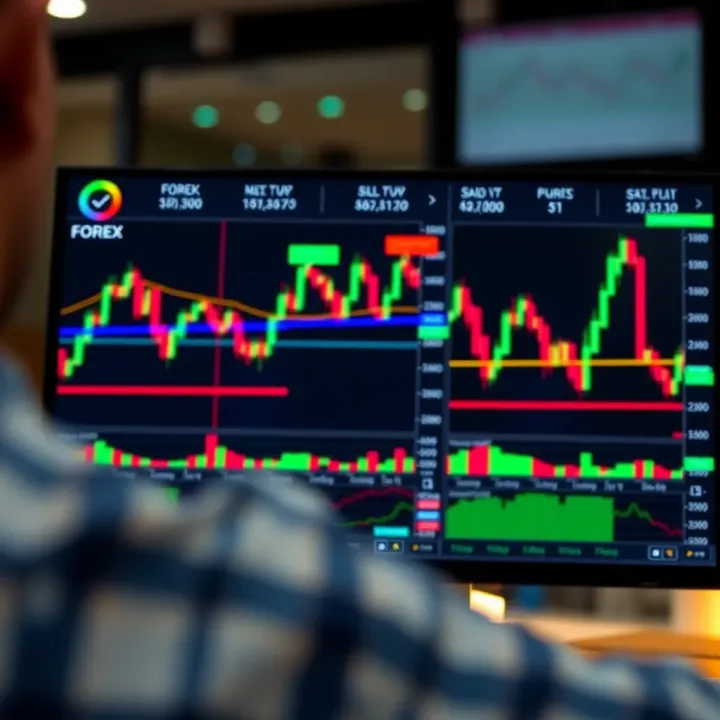
Demo accounts offer a risk-free space to refine your trading skills before committing your hard-earned Rands.
Using a demo account helps build confidence and familiarity with functions like charts, indicators, and order types (market, limit, stop). You can try out new strategies or automatic trading robots (Expert Advisors) on platforms like MetaTrader 4 or 5 without consequence. This is valuable in South Africa, where retail traders often face steep data costs; practising digitally can save on unnecessary trade mistakes.
However, demo trading can feel quite different from live trading. Emotional factors, such as fear and greed, rarely come into play when there’s no real money at stake. Because of this, many new traders might not develop the discipline required for consistent success under live conditions. It’s key to treat demo trading seriously — as if your own cash were involved.
In the South African context, using demo accounts also means understanding how local market hours, news, and economic releases affect currency pairs. For instance, updates from the South African Reserve Bank or shifts in commodity prices can move the ZAR and influence trading decisions.
To sum up, demo accounts:
Provide a playground to explore forex trading without financial risk
Help users learn how to navigate trading platforms effectively
Allow testing of strategies based on actual market data
Offer exposure to South African market-specific conditions
In the sections ahead, we'll explore how to make the best use of demo accounts and prepare you for live trading with real Rands.
A forex demo account gives you a practice space where you can trade currencies without using real money. Think of it as a flight simulator for pilots — it mimics the trading conditions you’d experience in the real market, but there’s no actual financial risk involved. This tool is particularly useful for learning how trading platforms work, testing strategies, and building confidence before you commit Rands to live trading.
The demo account acts like a sandbox where you can place trades, watch price changes, and manage your open positions just as you would with live accounts. For example, if you were testing how a specific strategy performs in volatile times, your demo trades would simulate these conditions using market data but without locking in your own money. It’s a low-pressure setting to try things out, especially if you’re new to forex.
Demo accounts usually provide live quotes and charts sourced directly from the forex market. This means when the EUR/ZAR rate moves during the day, you see that shift reflected instantly in your demo balance. As a result, you get familiar with how currency prices fluctuate in real time, which sharpens your ability to read market trends before you trade live.
A demo account typically comes preloaded with a set amount of virtual money — say R100,000 — which you can use to place trades. Since no real cash is involved, you can afford to make mistakes without worrying about losses. This setup encourages experimentation, such as adjusting your trade sizes or trying out complex order types, without the stress that accompanies risking real funds.
One key difference lies in how trades are executed. Demo accounts often fill orders instantly at the displayed price, while live accounts may experience slippage — where your trade fills at a slightly different price due to rapid market moves. For instance, during high-impact news events, your market order for USD/ZAR might execute a few pips worse live, a reality that demo tools seldom replicate.
Trading with virtual money doesn't stir the same emotional reactions as risking your own cash. The nervousness, excitement, or fear that influence decisions in live trading aren’t usually felt in demos. This means you might take risks or behave differently in a demo than you would when real money is on the line. Understanding this gap is crucial for preparing yourself psychologically to trade live.
Most brokers offer nearly identical platforms for demo and live accounts to ensure smooth transition. However, in some cases, demo platforms might lack certain features, or updates might roll out to live environments first. Additionally, some brokers apply restrictions or delays in demo environments to prevent unrealistic trading behaviour, so it’s worth checking how closely your demo mimics the live experience.
Starting with a forex demo account lets you navigate the challenges of trading without the burden of financial loss, sharpening your skills and understanding of the market before moving to a live account.
Using a demo account effectively goes beyond just opening it and clicking around. The value lies in how you approach practising and learning. For a South African trader, this means selecting the right broker, getting comfortable with the platform, and trying out different strategies and tools without risking real money. This hands-on experience can save you from costly mistakes when you switch to live trading.
Choosing a reputable broker is the first and most crucial step. Even though you're not risking real cash, the quality of data and execution matters. Brokers regulated by the Financial Sector Conduct Authority (FSCA) give traders more confidence, offering accurate pricing and realistic spreads. For example, using a popular broker like IG Markets South Africa or Plus500 ensures your demo experience closely mirrors real market conditions. Reliable brokers also provide solid customer support and trustworthy trading platforms, which makes learning smoother.
Setting up the account and software reasonably straightforward, but it's worth paying attention to some details. After signing up, ensure your demo account is funded with enough virtual money to test various strategies—some brokers let you customise this amount. Download the correct software or access the web platform. For example, MT4 (MetaTrader 4) is a globally-used platform offered by many South African brokers and provides a great learning environment. Installing mobile apps alongside desktop versions gives you flexibility to practise whenever and wherever.
Understanding the trading platform is fundamental to trading success. Spend time learning the toolbars, charting features, and order types. For instance, practise placing market and pending orders, setting stop-losses, and viewing your trade history. Familiarity prevents wasting real money on avoidable mistakes. Most platforms offer video tutorials and user guides, so use these resources to master navigation before moving into real funds.
Testing technical and fundamental analysis on a demo is a safe place to verify how your chart reading holds up. For example, if you spot a double-top pattern suggesting a reversal, try placing trades accordingly and see how it pans out over time in the demo environment. Similarly, if you want to track economic news affecting the rand, use the demo to practise reacting to release times without the stress of losing money.
Trying different trade sizes and types helps you understand how position sizing impacts risks and rewards. Use your demo account to experiment with mini, micro, and standard lots, and practise various trade types like scalping or swing trading. This teaches you how leverage affects margin and potential equity swings. For example, a R10,000 virtual balance can be split into multiple smaller trades to test different approaches without risking your entire bankroll.
Managing risk with stop-loss and take-profit orders is where demo trading really proves its worth. In live markets, setting these orders protects your capital and locks in profits. Practising this in a demo helps you find the right levels based on historical support and resistance. For instance, placing a stop-loss just below a known support line can shield you when the market unexpectedly dips. This trial-and-error in a risk-free environment builds discipline and sharpens your risk-management skills.
Regularly reviewing your demo trades and learning from both wins and losses prepares you for the realities of live forex trading. Treat your demo account like a training ground; the better you practise, the more confident you'll be when handling real money.
Effective use of a demo account takes intention and focus. Start right with a trustworthy broker, master the platform, and try out diverse, well-thought-out strategies. This methodical approach helps South African traders develop the skills and habits needed to succeed with live forex trading in the local context.
South African forex traders gain several practical advantages from using demo accounts. These accounts provide a safe space to develop trading skills and test strategies without risking real money. They help traders build confidence and familiarise themselves with market behaviour in a hands-on way.
Building confidence and skills is probably the biggest plus for beginners. Starting with a demo account lets you practice entering and exiting trades, reading charts, and using trading tools without feeling stressed about losing cash. For instance, someone in Johannesburg trying forex for the first time can experiment with indicators like the Relative Strength Index (RSI) or Moving Averages without worrying about blowing their budget. This kind of trial-and-error learning helps sharpen decision-making and eases the shift to live trading.
Experiencing market conditions firsthand is another valuable benefit. Demo accounts reflect real-time price movements and volatility, allowing traders to understand how the forex market reacts during different sessions or news events. A Cape Town trader can, for example, observe the price swings during the New York or London sessions and adapt strategies accordingly. This hands-on market exposure reduces surprises when real money is on the line.
Navigating popular South African brokers gets easier with demo accounts. Many local traders use platforms offered by brokers such as IG, EasyEquities, or ThinkMarkets, which provide demo versions to try their services. By practising on these platforms, traders can get to grips with order placement, chart analysis, and account management before committing funds. This familiarity minimises errors and technical hiccups when switching to live accounts.
Trial of mobile and desktop platforms proves especially important for South African traders who often rely on mobile connectivity and data efficiency. For example, testing the MTN or Vodacom network’s performance with a broker’s mobile app helps ensure smooth trading during peak hours or loadshedding periods. Some traders prefer using desktop platforms like MetaTrader 4 for in-depth analysis but switch to mobile apps when on the move. Demo accounts give the chance to find the right balance between convenience and functionality.
Using a demo account is much like learning to drive on a simulator before hitting the busy highways of Johannesburg or Durban. It creates a familiar environment, helping you avoid costly mistakes and smooth out your trading journey.
This approach not only builds skills but also respects unique local trading considerations such as intermittent internet service and fluctuating market volatility linked to global economic events. By taking the time with a demo account, South African traders can protect their capital and enter live markets better prepared.
Demo accounts offer a safe space to learn forex trading without risking real money, but recognising their limits is just as important as using them effectively. Understanding what demo trading cannot replicate helps traders avoid pitfalls when moving to live markets. These differences mainly concern emotional engagement and market conditions, which shape how trades behave in reality.
When trading with a demo account, the money you use is virtual, which changes the emotional stakes entirely. Losing R10,000 virtual funds doesn’t carry the same sting as watching R10,000 disappear from your actual trading balance. This detachment can lead traders to be less cautious or more reckless when practising. In live trading, the financial pain from losses often induces stress and hesitation, which demo accounts don’t prepare you for.
Because emotions like fear and greed heavily influence decision-making in live markets, practising only on demo platforms can give a false sense of security. Real-money trades often feel very different when you can’t just shrug off losses as a game. For example, a trader might overtrade or ignore risk controls on a demo account, but such behaviour could quickly lead to significant losses in a live setting.
Risk-taking changes when your capital is on the line. On demo accounts, users typically take bigger risks knowing there’s nothing to lose. This can create habits that don’t translate well into live conditions. Once real money is at stake, even experienced traders often scale back or second-guess their strategies.
Understanding your risk tolerance only happens after experiencing the emotional rollercoaster of live trades. For instance, a trader might confidently use high leverage on a demo but feel overwhelmed when faced with actual margin calls or rapid market movements. It’s crucial to bridge this gap by transitioning gradually to live trading, starting small, and acknowledging your emotional responses.
Demo accounts generally simulate prompt order execution and clean fills, but live markets often behave differently. Slippage—where your order fills at a worse price than expected—and order delays are common in real trading, especially during volatile times or low liquidity.
For example, during major news releases like SARB rate decisions, the forex market can experience rapid price swings and slower order execution. A demo account won’t always recreate these nuances, potentially lulling traders into thinking execution is always smooth and predictable. Recognising this helps you avoid surprises and prepare with realistic expectations.
Live forex markets can be influenced by sudden events—changing political situations, unexpected economic data, or even local factors like South African municipal elections—that demo environments cannot perfectly mimic. Price gaps, unexpected reversals, and rapid volatility spikes can occur without warning.
For instance, a trader practising on a demo might never face a scenario where a currency pair gaps overnight due to geopolitical news, affecting stop-loss orders or margin requirements. Understanding that real markets aren’t always orderly prepares traders to handle these shocks with strategies that address unpredictability.
Recognising these limits doesn’t diminish the value of demo accounts. Instead, it makes your preparation more realistic and your transition to live trading smoother. Demo trading is a vital step, just not the full journey itself.
Moving from practice to real money trading is a critical step for any forex trader. While demo accounts build skills and confidence, trading live brings new challenges such as emotional pressure and real financial risks. Knowing when and how to make this switch can save you from costly mistakes.
Before going live, assess your performance in the demo account. Consistent profits over a reasonable time frame—say, several weeks—along with a clear understanding of your trading strategy, are key indicators you're ready. It’s not just about winning trades but managing losses and sticking to your plan. For instance, if your demo trades show discipline in using stop-loss orders and sensible risk per trade, you’re likely prepared for the live markets.
Launching live trading doesn't mean diving in at full throttle. Start with small positions, often known as micro or mini lots, to limit potential losses. This approach allows you to adapt to the emotional impact of real money on the line without burning a hole in your pocket. For example, trading R100 or R200 per pip movement instead of R1,000 lets you learn how to handle stress, slippage, or delays without severe financial damage.
Risk management is the backbone of successful live trading. Tools such as stop-loss and take-profit orders help control losses and lock in gains automatically. South African traders should also consider using trailing stops that adjust as the trade moves favourably. These safeguards are vital because emotions can cloud judgement when real money is involved. For instance, a trader relying on well-placed stop-losses is less likely to hold onto a losing position out of hope or fear.
Selecting a broker authorised by the Financial Sector Conduct Authority (FSCA) ensures your funds and personal information are protected under South African law. An FSCA-regulated broker adheres to local compliance standards, offering transparency on fees, business practices, and dispute resolution. This reduces the risk of fraud, a concern especially relevant for newcomers.
Live accounts carry costs such as spreads (the difference between buying and selling prices) and sometimes commissions. Lower spreads can improve profitability, but check for hidden fees or mark-ups. Leverage amplifies potential profits but also increases risk. In South Africa, typical leverage ratios range from 1:10 to 1:200, depending on the broker and regulatory settings. For example, using too much leverage without experience can wipe out your account quickly.
To open a live trading account, brokers must comply with the Regulation of Interception of Communications and Provision of Communication-Related Information Act (RICA) and the Financial Intelligence Centre Act (FICA). This means you’ll need to provide identification documents to prove your identity and address. These measures protect against identity theft and money laundering, keeping South African forex trading safer and more transparent.
Making a smooth transition from demo to live trading requires honest self-assessment, careful financial management, and choosing the right broker. Start small, protect your funds with solid risk controls, and trade with an FSCA-regulated entity that respects South African laws and your peace of mind.
📈 Explore the essentials of forex trading in South Africa: understand currency pairs, effective strategies, market risks, and steps to start trading confidently.
📉 Learn how forex margin works, why it matters, and how to avoid margin calls. Tips for South African traders on managing risks and trading smarter.

📉 Explore free forex trading signals, their pros & cons, how to spot reliable providers, and smart ways to include them in your trading strategy 📊

💱 Get a clear view of global forex trading! Learn market basics, currency pairs, strategies, risks, and rules tailored for South African traders.
Based on 5 reviews