

How to Convert Hexadecimal to Binary Easily
🔢 Learn how to convert hexadecimal numbers to binary with our clear guide! Step-by-step examples and practical tips for computing and digital electronics enthusiasts. 💻
Edited By
Emily Saunders
Binary fission is the go-to method of asexual reproduction for many simple organisms, especially bacteria. Unlike sexual reproduction, which mixes genetic material from two parents, binary fission is straightforward: one cell splits into two. This process is vital for bacteria to multiply rapidly, especially in environments where nutrients are plentiful – think about how quickly your yoghurt starter culture grows or how infections spread in a warm, moist place.
At its core, binary fission ensures survival and growth. A single bacterial cell doubles its DNA, copies all essential machinery, then divides into two identical daughter cells. These aren't clones just in name; their genetic material is an exact copy unless mutations occur, making the process effective for fast replication but less useful for generating genetic diversity.
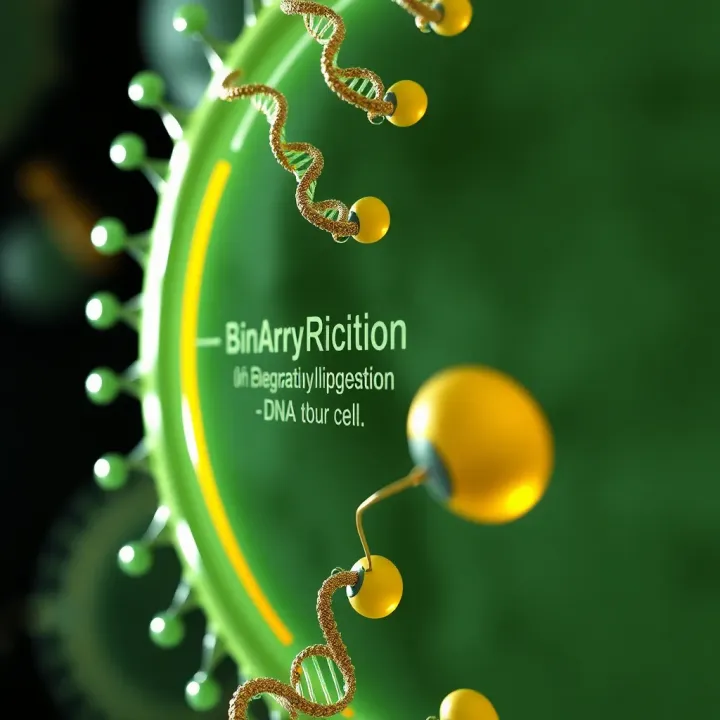
The speed of binary fission is a key reason bacteria can multiply so quickly, sometimes doubling their numbers in as little as 20 minutes under ideal conditions.
Understanding binary fission helps explain outbreaks of bacterial infections, the rapid spoilage of food, or even mechanisms behind bioremediation, where bacteria clean up pollutants. It’s a basic, yet powerful biological tool.
This reproduction method isn't universal though. Eukaryotic cells, such as human cells, divide by mitosis or meiosis, which involve more complex processes to manage larger genomes and produce genetic variation.
In summary: binary fission is a rapid, efficient way for prokaryotic cells to reproduce, key to their survival and adaptation in diverse environments. Knowing how it works offers insights into managing bacterial growth in both healthcare and industrial settings.
Understanding how binary fission works in cells helps clarify why this process is so effective for rapid reproduction, especially in prokaryotes like bacteria. Binary fission enables a single cell to split into two genetically identical daughter cells, facilitating quick population growth—particularly useful in environments where resources are abundant.
The first step in binary fission involves copying the cell’s DNA. This replication ensures that each daughter cell receives a full set of genetic instructions. In bacteria such as Escherichia coli, DNA replication starts at a specific point called the origin and proceeds bidirectionally. This precise copying is vital – any errors can lead to defective offspring, which could be more vulnerable to environmental challenges.
Once DNA replication is complete, the two copies of the chromosome move to opposite ends of the cell. This segregation prevents the genetic material from getting tangled and guarantees that each new cell inherits one complete chromosome. Clear separation is crucial because, without it, cells might end up with unequal or incomplete genetic content, which can affect survival and reproduction.
Finally, the cell membrane pinches inwards, and the cell wall forms a division between the two new cells. This division, called cytokinesis, physically separates the daughter cells, each a clone of the original. For instance, during cytokinesis in rod-shaped bacteria, the membrane and cell wall construction must be coordinated closely to keep both cells intact and functional after splitting.
DNA carries all the genetic information necessary for cell function and reproduction. In binary fission, the DNA's ability to replicate with high fidelity is foundational. Consider bacteria exposed to harsh conditions like antibiotics; mutations in DNA during replication can sometimes confer resistance, impacting medical treatment and public health.
The cell membrane controls what enters and leaves the cell, while the cell wall provides structural support. During binary fission, the membrane’s flexible nature allows it to fold inward, and the cell wall synthesises new material to form the septum dividing the cells. For gram-positive bacteria with thick walls, this process requires more careful coordination compared to gram-negative species.
Specific enzymes like DNA polymerase assist in copying DNA, while proteins such as FtsZ form a ring at the cell’s midpoint, guiding the division process. This ring acts like a scaffold, recruiting other proteins to remodel the membrane and cell wall. Without these proteins organising the event, the cells could fail to divide properly, leading to abnormal or incomplete daughter cells.
Binary fission’s efficiency and precision rely on the coordinated work of DNA replication, chromosome segregation, and physical cell division, supported by specialised proteins and membrane dynamics.
Understanding these steps highlights why organisms relying on binary fission can multiply rapidly, influencing everything from environmental ecosystems to clinical settings.
Binary fission breaks down into distinct stages that ensure a single cell divides accurately into two. Understanding these stages is key for appreciating how bacteria and similar organisms reproduce with swift precision. Each step safeguards the transfer of genetic material and prepares the cell for division, minimizing errors that could affect survival or growth.
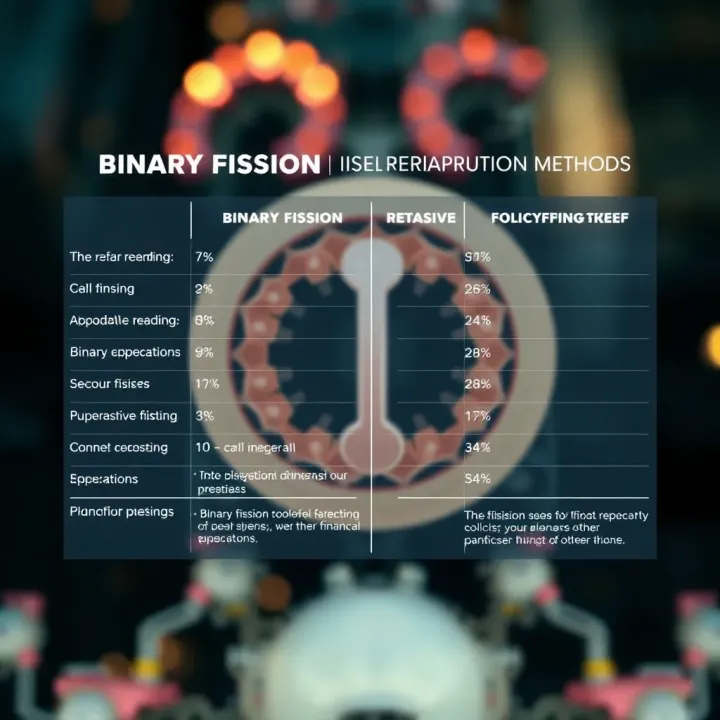
The first stage involves the initiation of DNA replication. The cell's circular chromosome unwinds at a specific site called the origin of replication, allowing enzymes to start copying the genetic code. This phase is crucial because it doubles the genetic material, laying a solid foundation for two identical offspring. For example, Escherichia coli (E. coli) can complete this phase in as little as 20 minutes under ideal lab conditions, showcasing how rapid bacterial reproduction can be.
Once DNA replication is underway, the cell begins to elongate to make space for the two chromosomes. Proteins help guide each copy towards opposite poles of the cell, segregating the genetic material evenly. This orderly movement prevents mistimed or unequal division, which could result in daughter cells lacking vital genetic instructions. Cell elongation also signals the cell’s physical readiness to split, ensuring it reaches an appropriate size before proceeding.
The final stage sees the ingrowth of the cell membrane and wall at the cell’s midpoint, known as cytokinesis. This constriction pinches the cell into two independent daughter cells, each containing a complete set of genetic material. These new cells then enter their own cellular cycles, capable of further fission. This phase marks the completion of the binary fission process, illustrating how the entire operation — from replication to physical separation — happens in a continuous, well-coordinated manner.
The efficiency of binary fission is why bacteria can multiply rapidly, sometimes doubling their population in less than an hour under favourable conditions.
Understanding these stages highlights the precision behind what might seem like simple reproduction. For traders or investors watching biotech developments or infection control, recognising how swiftly bacteria multiply underlines the challenges in managing infections and the need for rapid-response treatments and diagnostics.
Binary fission is the main way many unicellular organisms multiply, especially in the microbial world. Understanding which organisms rely on this method helps explain their rapid growth, adaptability, and impact on ecosystems and industries. From bacteria found in soil and water to certain protozoa, binary fission keeps populations thriving and often complicates control measures in health and agriculture.
Many bacteria species reproduce through binary fission, allowing their populations to explode under favourable conditions. Escherichia coli (E. coli), common in the human gut, divides rapidly to maintain its role in digestion but can also multiply uncontrollably if conditions change, causing infections. Staphylococcus aureus, another familiar example, uses binary fission to colonise skin and cause various infections. These examples show how binary fission underpins both beneficial and harmful bacterial activity in South Africa and worldwide.
Archaea, often found in extreme environments like hot springs and salt pans, also rely on binary fission. Their ability to reproduce quickly helps them survive in hostile conditions where few other life forms manage. For instance, species such as Halobacterium thrive in salty environments and reproduce swiftly via binary fission, maintaining their populations despite fluctuating conditions.
Bacteria and archaea share adaptations that optimise binary fission for survival. They often have streamlined genetic material, allowing DNA replication to occur fast, and possess robust cell walls that protect against environmental stress. Some bacteria can form spores, a dormant state resistant to heat, drought, or disinfectants, resuming division when conditions improve. These traits make controlling bacterial growth challenging in healthcare settings and food processing.
Beyond prokaryotes, certain protozoa and single-celled eukaryotes also reproduce using binary fission. Amoeba, a well-known freshwater protozoan, divides by binary fission to increase its numbers rapidly, affecting both natural aquatic ecosystems and water quality. Paramecium, another single-celled organism, uses binary fission as its primary reproduction mode, showcasing that this method isn't limited to bacteria.
These eukaryotes have slightly more complex cell structures than bacteria, including membrane-bound organelles. Still, binary fission remains an efficient way to multiply quickly without the need for a sexual partner. This rapid reproduction influences the balance of microorganisms in environments, which can impact nutrient cycling and disease transmission.
Understanding which organisms use binary fission reveals how this straightforward cell division method fuels population growth in diverse microscopic life. From bacteria influencing health and industry to protozoa shaping ecosystems, binary fission plays a foundational biological role.
Common organisms include bacteria like E. coli and archaea like Halobacterium.
Adaptations such as spore formation or resilient cell walls aid survival during harsh conditions.
Some protozoa also rely on binary fission, bridging prokaryotic and eukaryotic life.
The efficiency of binary fission explains why these organisms can expand populations rapidly, which has direct implications for sectors like healthcare, agriculture, and water management in South Africa and beyond.
Binary fission offers certain advantages that have helped shape the rapid growth and survival strategies of many organisms, particularly bacteria. However, alongside these benefits come clear limitations that can affect long-term adaptability.
Binary fission is a swift and straightforward way for cells to divide and multiply. For instance, Escherichia coli can replicate every 20 minutes under optimal conditions. This means bacterial populations can explode in a short time, which is essential when nutrients are abundant or conditions are favourable. Such quick reproduction allows bacteria to colonise new environments rapidly or bounce back following disruptions like a flush of clean water in a sewage system.
Added to this, the process does not require complex steps or mate-finding, unlike sexual reproduction. This efficiency benefits not only bacteria but also some protozoa and single-celled eukaryotes, enabling them to maintain robust populations with limited effort.
Binary fission produces genetically identical offspring, resulting in clonal populations. This genetic uniformity can be a strength when an organism’s genetic make-up is well suited for a stable environment. For example, in specialised niches such as hot springs or saline pans, a bacterial strain perfectly adapted to those conditions will maintain its dominance without genetic dilution.
This stability means that key advantageous traits persist across generations without the risk of recessive harmful mutations disrupting population fitness. In industrial applications like yoghurt production, maintaining clonal cultures ensures consistent quality and product characteristics.
However, the flip side of cloning is the lack of genetic diversity. Without recombination, populations have little variation, which reduces their capacity to adapt when the environment changes unexpectedly. If a new antibiotic is introduced or a sudden drought hits, a genetically uniform population may be wiped out in one sweep.
This vulnerability is why some bacteria occasionally acquire genetic material from other organisms via horizontal gene transfer (HGT). Such processes somewhat offset the genetic bottleneck caused by binary fission, but these are exceptions rather than the rule.
Populations produced through binary fission are also more at risk during environmental stress. For example, exposure to extreme temperatures, toxic chemicals, or ultraviolet radiation can impact all members of a clonal population equally. Unlike sexually reproducing populations, they don’t have a mix of traits that might help some individuals survive tougher times.
In agricultural settings, clonal fungal or bacterial populations can be more susceptible to pesticides or fungicides, making it easier for infestations to either be eradicated completely or spread rapidly if resistant individuals emerge.
While binary fission enables rapid and efficient reproduction, the risks tied to low genetic diversity and environmental challenges must be carefully considered, especially when managing bacterial populations in health, industry, and ecosystems.
In summary, the rapid reproduction and stability binary fission provides come with trade-offs that impact evolutionary flexibility and resilience. Understanding these helps investors and analysts assess microbial growth patterns or risks associated with bacterial strains in various contexts such as food production, health, or environmental management.
Binary fission stands out as a straightforward, fast method of reproduction mainly used by prokaryotic cells like bacteria and archaea. Contrast this with other types of cell division found in eukaryotes, such as mitosis and meiosis, which involve more complex mechanisms adapted for different biological needs. Understanding these differences offers practical insights into growth rates, genetic diversity, and survival strategies of various organisms.
Binary fission is simpler than mitosis. It involves replicating the cell’s single circular chromosome, then splitting the cell into two identical daughter cells. Mitosis, on the other hand, is more complex, dealing with multiple linear chromosomes, organising a spindle apparatus, and carefully separating sister chromatids. This complexity ensures accurate genetic material distribution in multicellular organisms.
From a practical standpoint, binary fission’s simplicity enables bacteria to reproduce quickly, which is ideal for rapid population growth under favourable conditions. Mitosis, while slower, is essential for tissue maintenance and repair in plants and animals where genetic stability across cells matters.
Binary fission occurs exclusively in prokaryotes. These cells lack a nucleus and have relatively unorganised DNA, making the process straightforward. Eukaryotic cells, with their nucleus and larger genomes, divide by mitosis for asexual reproduction or growth, ensuring DNA is neatly packaged and distributed.
For investors or analysts focused on biotech or pharmaceutical sectors, recognising this difference assists in predicting bacterial growth rates or understanding how certain drugs targeting cell division might work. For example, antibiotics like ciprofloxacin disrupt bacterial DNA replication, effectively halting binary fission.
While binary fission and meiosis are both forms of cell division, their purposes diverge sharply. Binary fission produces two genetically identical cells, maintaining the species’ genetic makeup. Meiosis, meanwhile, is a reduction division producing gametes with half the chromosome number, increasing genetic variation.
This key difference means binary fission offers stability and rapid multiplication, whereas meiosis supports diversity, essential for populations facing changing environments or disease pressures.
Meiosis is fundamental in sexual reproduction, enabling the combination of genetic material from two parents. Binary fission plays no role in sexual reproduction since it creates clones.
In applied contexts such as crop improvement or animal breeding, meiosis underpins genetic recombination strategies. Meanwhile, understanding binary fission helps manage bacterial populations, be it in fermentation industries or controlling pathogens.
Recognising these distinct modes of cell division helps investors and analysts appreciate biological realities behind the organisms they study or work with, revealing how growth and adaptation happen at the cellular level.
🔢 Learn how to convert hexadecimal numbers to binary with our clear guide! Step-by-step examples and practical tips for computing and digital electronics enthusiasts. 💻

🔢 Learn to convert hexadecimal to binary easily! Explore manual steps, online tools, common hurdles, and practical tips in everyday tech use. 🖥️

Learn how to convert words to binary code 💻. Explore binary basics, ASCII & Unicode, conversion tips, tools, and real-world uses in computing and communication 🔢.

💻 Explore hex to binary conversion: understand manual steps, software tools, and practical uses in coding and electronics. Easy examples included! 🔢
Based on 14 reviews